Work starts on a £746 million (₦1.45 trillion) upgrade of Apapa and Tin Can Island ports, financed through export credit
The two Lagos ports handled 59.83% of Nigeria's imports by value in Q2 2026.
Key findings
- The upgrade of Apapa and Tin Can Island ports is estimated at £746 million, about ₦1.45 trillion, the marine minister said at the ground-breaking.
- The finance minister called it Nigeria's largest sovereign export credit transaction since 2009 and the first Nigerian project for Poland's export credit insurer, KUKE.
- The government expects at least 20,000 direct and indirect jobs and targets cargo clearance within 48 hours, against dwell times of 10 to 18 days today.
- Apapa handled 44.76% and Tin Can Island 15.07% of Nigeria's imports by value in Q2 2026, NBS trade data on Dataminal show.
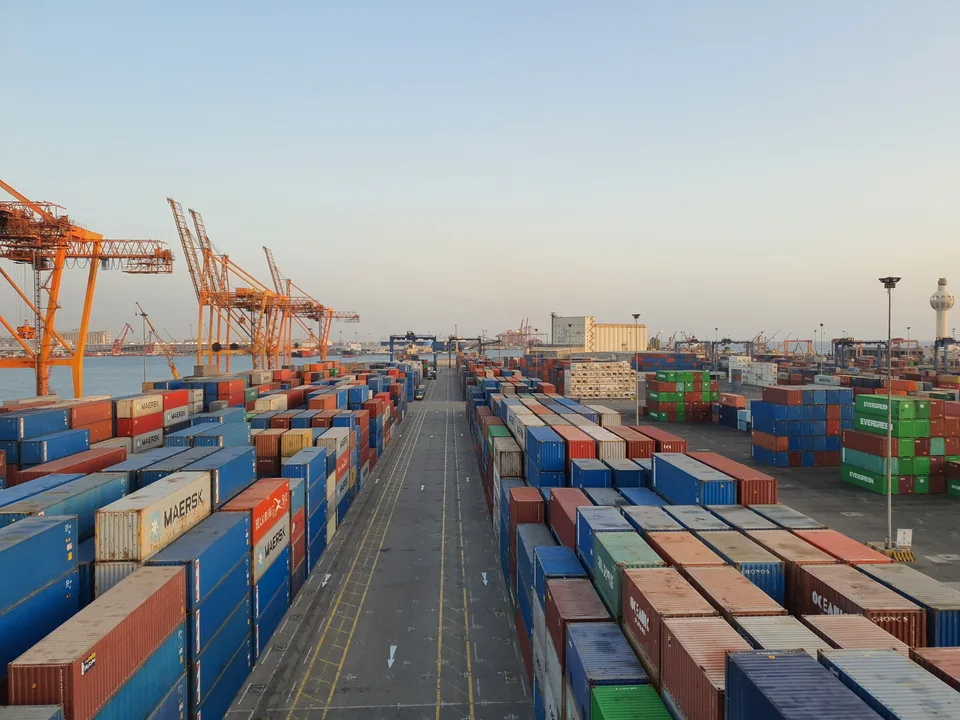
The Minister of Marine and Blue Economy, Adegboyega Oyetola, on 25 November flagged off the modernisation of the Lagos Port Complex at Apapa and Tin Can Island Port, with the Minister of Finance, Taiwo Oyedele, beside him. Oyetola put the cost at £746 million, about ₦1.45 trillion, ThisDay and Daily Trust reported. The work covers quay walls and berths, dredging of navigation channels, access roads, cargo-handling equipment and operating systems.
Oyedele described the financing as Nigeria's largest sovereign export credit transaction since 2009 and the first project in the country for Poland's Export Credit Insurance Corporation, KUKE, according to Daily Trust and Arise. Neither outlet gave the loan's terms or its lenders.
The government expects the project to create at least 20,000 direct and indirect jobs and, Daily Trust reported, to cut cargo clearance to 48 hours. Oyetola said cargo dwell time at Nigerian ports has ranged from 10 to 18 days, against three to five days at leading ports abroad, and estimated that the delays cost the economy as much as $4 billion a year. Cargo throughput, he said, has grown from 8.11 million tonnes in 1977, when Tin Can Island opened, to 129.3 million tonnes.
How much trade runs through the two ports
The National Bureau of Statistics' trade data on Dataminal show how concentrated Nigeria's imports are. In Q2 2026, Apapa took in 44.76% of imports by value and Tin Can Island 15.07%, together 59.83%.
| Apapa Port | 44.76% |
|---|---|
| Tin Can Island | 15.07% |
| Both ports | 59.83% |
That concentration is why the minister has set up an inter-ministerial committee of his ministry, the Nigerian Ports Authority and the Nigerian Ports Economic Regulatory Agency to draw up a business continuity and cargo flow plan. It is to phase construction and coordinate vessel scheduling, truck traffic and the use of other ports while the work goes on.
Why it matters
Slow clearance at Lagos adds demurrage and storage charges to the landed cost of imports and delays exporters. If the upgrade delivers faster clearance, it lowers costs for importers and manufacturers; if construction is poorly sequenced, the same two ports that carry most of the country's imports could become more congested before they improve.
What to watch
- The terms of the export credit facility and the contractors named to deliver it.
- The cargo flow plan, and how much traffic moves to Lekki, Onne and other ports during construction.
- The approved upgrades of Onne, Rivers, Delta and Calabar ports that the minister said would follow.
Methodology
The project's cost, scope, financing, job and clearance targets and the ministers' statements come from ThisDay, Daily Trust and Arise reports of the 25 November ground-breaking. Port shares are the National Bureau of Statistics' Q2 2026 imports by port of entry, by value, on Dataminal; the combined share adds the two ports' shares.